
LantauMama - making healthy living accessible
  • Blog
    • Family Fun
    • Cantonese School
    • About Me
  • Classes
  • Events
  • Shop
  • Links

Kefir and Kombucha - the importance of burping

3/5/2014

 
Print Friendly and PDF
Picture
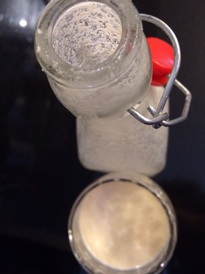
With second ferments of kefir and kombucha, it is common to do them in a sealed bottle to encourage some natural carbonation to make a healthy probiotic fizzy drink.

Of course, the danger is 'explosions'.

I make sure I 'burp' my bottles as shown in the below videos.

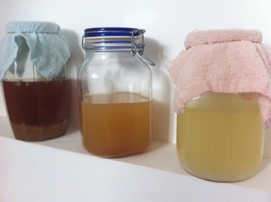
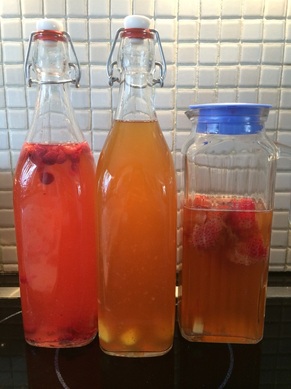
In summer, I often forgo the sealed bottle, and do the second ferment in a more open bottle.  You can see two of my 'closed' ferments on the left, and a more 'open' bottle on the right.  I still get a slight fizz in the open bottle.  Another option is a bottle with a cloth on the top (to keep out bugs, but let the gas out).

If you feel your bottles are too carbonated to burp, then put them in the fridge to slow down the fermenting, if you are still worried after that - open them outside!

When I travel across town to teach kefir classes, I bring my kefir bottles in a cooler bag with lots of ice blocks - nobody wants a class that starts with a bang.

The below videos show 'how to burp' your bottles. 

Homemade Almond Milk Kefir

17/2/2014

 
Print Friendly and PDF
Picture
(Gluten Free, Vegan, Raw, Fermented, Refined Sugar Free) 


I love almond milk.  I love kefir.  What better than homemade almond milk fermented with kefir grains?!

This drink is smooth and tangy at the same time, and chock full of great probiotics for you.

Drink it straight, put it in your muesli, or mix it with some chia seeds for a raw dessert - however you use it it won't last long.

There are two steps to this process, first to make the almond milk, second to ferment it.

Do watch the slide show below for key steps in images and captions.  

Ingredients
  • 2.5 cups of almonds, soaked for 4-12 hours
  • 5 cups of water
  • 5 dates (soaked for 2-12 hours)
  • 1/2 Tablespoon of vanilla extract
  • 1/8 teaspoon of pink Himalayan salt 

Directions
  • Drain and rinse the almonds after they have soaked
  • Put all ingredients in your Vitamix or other high speed blender
  • Blend until smooth - 1-2 minutes
  • Strain through a cheese cloth, nut milk bag or Chinese soup bag**
  • Squeeze to get all the liquid out
  • Put the almond meal aside to use in the fabulous Raw Brownies with a Secret recipe.
  • Pour the almond milk into a glass jar

Now, you could just stop here, and enjoy your almond milk - and trust me, I did, at least one glass before fermenting the rest!

To Ferment
  • Add 2 Tablespoons of kefir grains*** to your large glass jar of almond milk
  • Cover with a cloth and rubber band and place in a warm place to ferment (the top of the fridge is good)
  • Ferment for 4-12 hours depending on the weather - taste after 4 hours, then every couple hours until it is the taste you like
  • Don't worry if the almond milk kefir separates (see photo below), it is normal, just stir it with a non-metal stirrer and either keep fermenting or strain depending on the taste.  
  • Once it tastes right to you, strain the grains with a plastic strainer
  • Save the grains in a glass jar in the fridge to use again

Once fermented, put in a glass bottle with a lid put in the fridge.

We usually finish it within two days, but it will last almost forever in the fridge. Did I mention a glass of Almond Milk Kefir goes great with these Raw Brownies?

You can also use this to make an awesome smoothie - almond milk kefir, some berries, acai berry powder and a banana - sooooo good!  This is a great way to use it if you accidentally ferment it a bit too long.

** Chinese Soup Bags can be found in the local ParkNShop or Wellcome in Hong Kong, they cost about 10 HK for 3 bags - great value and perfect for nut milk!

*** I use water kefir grains, then I keep them separate from my other grains in a jar dedicated to using with nut milks.  You can also use dairy milk grains, and they will work fine as well, it depends on what you have.

**** The reason I keep my nut milk grains separate from my other grains, is so that if I am sharing grains with someone with a nut allergy, I know not to give them the nut contaminated grains.  This is just a precaution because I love sharing my kefir grains.

Related Links
LoulaNatural - Raw Almond Milk
LoulaNatural - Kefir FAQ


Kefir Grains - Cleaning with Baking Soda

11/12/2013

 
Print Friendly and PDF
Picture
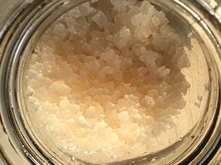
I make and drink about 1-2 liters of kefir water a day. Grains are really sturdy things, they multiply like crazy, and can live through most events.  Most grains would never need to be rinsed or washed.

Recently, my grains started to get a bit smelly, then they got really rotten egg / sulfur smelly, and so did my kefir water.  The kefir water got so bad, I could not drink it, nor even use it to wash hair - it was that smelly!  I had about 3 cups of grains at the moment, and didn't want to lose them all.  In the past this happened a couple times, and a quick rinse with water was all that was needed, but this time it was really strong and no amount of water rinsing was working.

Apparently the slimy texture of the water and the rotten egg smell might come from too much minerals - which would make sense as I use coconut sugar which is full of minerals. Also, the weather just changed from summer to winter here in Hong Kong, and my brews went from 12 hours to 24+ hours, but I had not yet reduced the amount of sugar I was using.

I tried to find something online about rinsing grains, but there is little info out there - and what I did find was either too simple (rinse with water, which I had previously tried) or much too complicated involving boiling water, cooling water, egg shells, etc...

My solution was simple:
  • Rinse the grains in filtered water 2 or 3 times
  • Put them in a 1 liter glass jar with plastic lid
  • Add filtered water until they are all submerged
  • Add 1 Tablespoon of baking soda
  • Shake the jar, and put it in the fridge
  • 12 hours later, rinse the grains from the jar
  • If they are still smelly (mine were!), repeat the above steps
  • 24 hours later, rinse the grains from the jar

Mine were then perfectly opaque and not smelly at all!
Best off all, 24 hours after that I was back to enjoying perfect tasting water kefir - yeah!

To prevent this from happening again, I am using less sugar.
  • 2 liters of filtered water
  • 3 Tablespoons of coconut sugar
  • 4-8 Tablespoons of water kefir grains
This will hopefully keep them happy and healthy!

I also rotate my grains - keeping them in two different jars in the fridge, and using one jar for a week, then the other jar, so they get a chance to rest.  

Just a note on the timing - in summer in Hong Kong, it is hot and humid, and my kefir water takes 8-12 hours.  In winter in Hong Kong, it is cool and dry, and my kefir water takes 24 hours.  

Related Links

http://loulanatural.com/kefir-faq/
http://www.yemoos.com/faqwamain.html
http://www.culturesforhealth.com/rehabilitating-fixing-repairing-damaged-water-kefir-grains
http://chemistry.about.com/cs/foodchemistry/f/blbaking.htm
http://culinaryarts.about.com/od/bakingdesserts/a/Baking-Soda-And-Baking-Powder.htm

Kefir and Kombucha and Fermenting - why why why

10/12/2013

 
Print Friendly and PDF
PictureWater kefir. Honey mead. Coconut water kefir.
Warning - this is not a comprehensive blog or post on kefir and kombucha - if you want that, see the book links at the bottom.

I have also included links to popular easy to read articles - this is not complicated, and it is becoming more common knowledge.

So here's the shortest most simple intro to kefir and kombucha ever.  More importantly, I hope to explain in a simple way, why the probiotics in homemade kefir, kombucha and fermented foods are so good for all of us and our trillions of friends in our guts!

Your gut
Everyone has loads of bacteria/microbes in their gut. Trillions of them, perhaps more.  In fact, we have more bacteria than human cells - how funky is that?! Scientists are studying them more and more because they believe they control a lot more than just digestion - they could possibly be the root of many chronic diseases and ailments.

is imbalanced
Many people, have an imbalance of these bacteria.  Why? Because our diet has changed over the years and we no longer eat and drink things that the good bacteria like - things like fermented foods.  But we do eat lots of things that the bad bacteria thrive on - things like refined flours and sugars and processed foods.  Other reasons include increased use of chemical anti-bacterials, and increased antibiotic use for both people and animals.

which means
What does an imbalance do - well for some people it can make them more susceptible to illnesses, for others it could make them uncomfortable or bloated after meals, for quite a few people it leads to 'leaky gut', IBS or other digestion issues.  It could potentially also contribute to chronic ailments, mood and more.

probiotics could help you
Solutions include changing one's diet and taking probiotics.  Probiotics are good things, they help populate your gut with the good bacterias - and therefore help them multiply and correct the imbalance.

but they are expensive
Well, probiotics are expensive (about 30-60 USD per month), and they are made in factories only out of limited numbers of strains (3-7 or so), and they lose potency from production to ingestion.

so try making kefir and other yummy ferments
There are 35 strains of probiotics in kefir, they in the right ratios and live harmoniously together, and they are alive ready to go and actually take up residence in your body and start working for you!**

easily at home.
So, by making fermented foods and drinks at home.  Then you can easily get probiotics, with more strains, fresher, cheaper, tastier and most importantly more effective.

*phew*

Kefir and Kombucha are two easy to make homegrown probiotic drinks.  I will post more on them in future posts so stay tuned...

**Special thanks to Louise Kane Buckley who wrote this great kefir FAQ http://loulanatural.com/kefir-faq/ and for reviewing this post.

Related Links

Books
Culture Your Life
Wild Fermentation
The Art of Fermentation

Websites and Articles
5 Ways to Heal your Digestive System
Kefir FAQ
What is Dysbiosis?
Live Science - 5 Ways Gut Bacteria Affect Your Health
The Economist - Gut Instinct 
NYT - Some of My Best Friends are Germs
HuffPost - What Your Gut Bacteria Says About You
Daily Mail - The Unlikely New Medicine... Pickled Cabbage

Videos
NPR - Gut Bacteria Cartoon 

Forward>>
    Picture

    LantauMama's Instagram

    Categories

    All
    Breakfast
    Dessert
    Events
    Fermentation
    Healthy Living
    Hong Kong
    Kefir Class
    Kids
    Niseko
    Recipes
    School
    Snacks
    Tuesday-tips

    Archives

    May 2018
    January 2018
    December 2017
    October 2017
    August 2017
    March 2017
    February 2017
    November 2016
    January 2016
    December 2015
    September 2015
    June 2015
    May 2015
    March 2015
    September 2014
    August 2014
    July 2014
    June 2014
    May 2014
    March 2014
    February 2014
    January 2014
    December 2013
    November 2013
    October 2013

    RSS Feed

    View my Flipboard Magazine.
Thank you so much for taking the time to visit Lantau Mama, truly I am flattered that anyone reads this!  
Feel free to contact me anytime via LantauMama @ Twitter I would love to hear from you.
The links below are how I try to cover my hosting costs without using advertisements.
My Iherb Page
Weebly Discount Link